
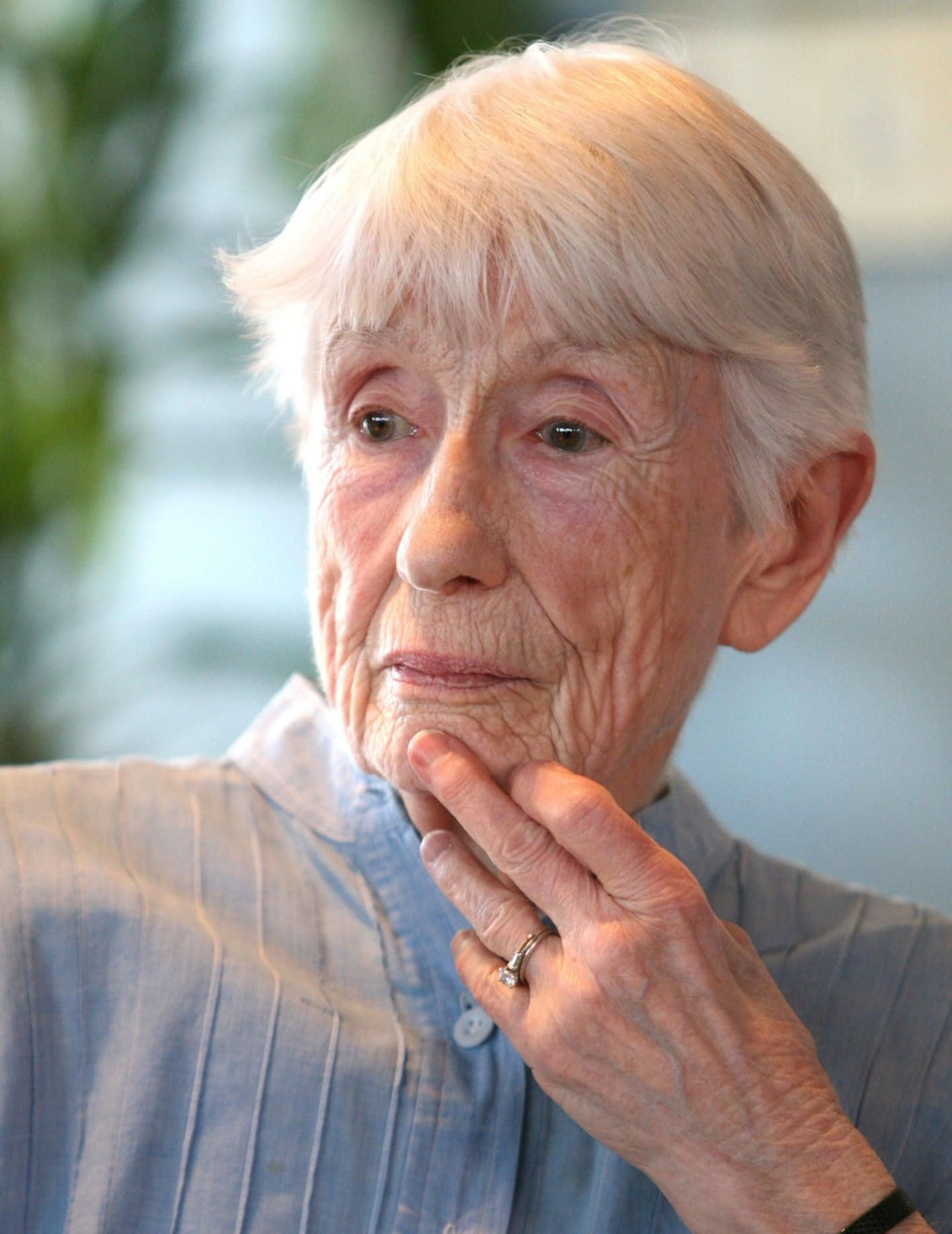
Dr. Edith Stokey was Associate Academic Dean and Secretary of the Kennedy School, and Lecturer in Public Policy, Emerita, at Harvard University , a position she reached by an unusually indirect route. Born Edith Morton Robinson in Mansfield, Massachusetts in 1923, she graduated from Radcliffe College with a degree in economics in 1943, having married Roger Provines Stokey, a Navy officer, weeks earlier while he was on weekend leave [reference:5]. While he served overseas she worked at the Woods Hole Oceanographic Institution, studying patterns of underwater sound for the Office of Naval Research. After the war the couple returned to study , he for a law degree, she for a master's in mathematics , and then moved to Wayland to raise four children .
She was recruited to the newly established Kennedy School in 1971 by Richard Zeckhauser, initially to teach microeconomics and public-sector operations research and to serve as secretary of the school , setting aside the doctorate in economics she had begun at Harvard . She never completed that degree, and it did not matter. Over the next four decades she became, in the words of colleagues, the school's "founding mother": she taught more than 2,000 graduate students, helped design the admissions and curriculum policies that still shape the school, served as associate academic dean, and mentored a generation of faculty including Dean David Ellwood, who said "Edith took me under her wing when I started as a struggling, new assistant professor teaching economics" .
Two contributions deserve particular note because they were structural rather than merely exemplary. She was the first female member of the faculty at the Kennedy School , and Mary Jo Bane , the first woman to hold the titles of tenured professor and of academic dean there , insisted on the distinction: "I use the language of 'hold the title' quite consciously, because I am not the first woman to do the jobs; Edith is... the fact Edith did the jobs, and did them so well, laid the groundwork for those of us lucky enough to be born a generation later" . She also invented the school's "point system" for allocating workload, introduced specifically to prevent discrimination against junior faculty in the assigning of work . Her scholarly output was deliberately modest in quantity and disproportionate in influence: *A Primer for Policy Analysis*, written with Zeckhauser in 1978, remains in use in public policy schools across the United States and gave the field its standard five-stage rational decision framework .
She retired in 2000 as lecturer in public policy, emerita, but kept her office in the Littauer Building and continued to hold office hours for years , and she remained closely involved with international students, travelling to India, Sri Lanka, Pakistan, Bangladesh and Israel into her seventies to interview applicants, 122 applications in hand for the Indian leg alone . In May 2008 the school unveiled her oil portrait outside the dean's office; the trees in its background double as decision trees, a reference to her Primer . Zeckhauser, who had recruited her 37 years earlier, was with her shortly before she died and recalled her parting message to those who loved her: *"Good-bye. Do good. Enjoy life."*
Dr. Stokey's career is the strongest possible argument that administrative work is intellectual work. She never finished the Harvard economics doctorate she began, and she never published a second book , and yet the Kennedy School's curriculum, its admissions policy, and its standards for how junior faculty are treated all carry her imprint. The workload point system she devised is the clearest case: a small, unglamorous administrative mechanism whose only purpose was to stop a structural unfairness, and which outlasted nearly everyone who resisted it.
Her teaching reputation was extraordinary and is worth stating in her colleagues' own terms. One said she could "teach economics to a stone"; another that she had "a flawless sense of what it takes to teach well"; another that even for students who struggled, she "patiently and toughly, kindly and mercilessly, showed them what they could do , and inspired them to do it" [reference:19]. The Primer grew out of that same gift: Zeckhauser describes bringing her his tangled drafts and watching her "unravel the knots" exactly as she had done with Leontief's lectures when they were students together [reference:20].
That is the faculty APC most needs in policy review. Policy manuscripts fail in predictable ways: the analytic frame is decorative rather than load-bearing, the recommendation outruns the evidence, or the trade-offs are asserted instead of analysed. Dr. Stokey spent forty years teaching people to lay out goals, identify alternatives, and reason from evidence to a defensible choice , and she brings that discipline, posthumously, to the manuscripts APC reviews.
The APC Leadership Team American Publication ConsultantsTell us about your manuscript and we will match you with the right expert from our team.
Get A Free Quote