
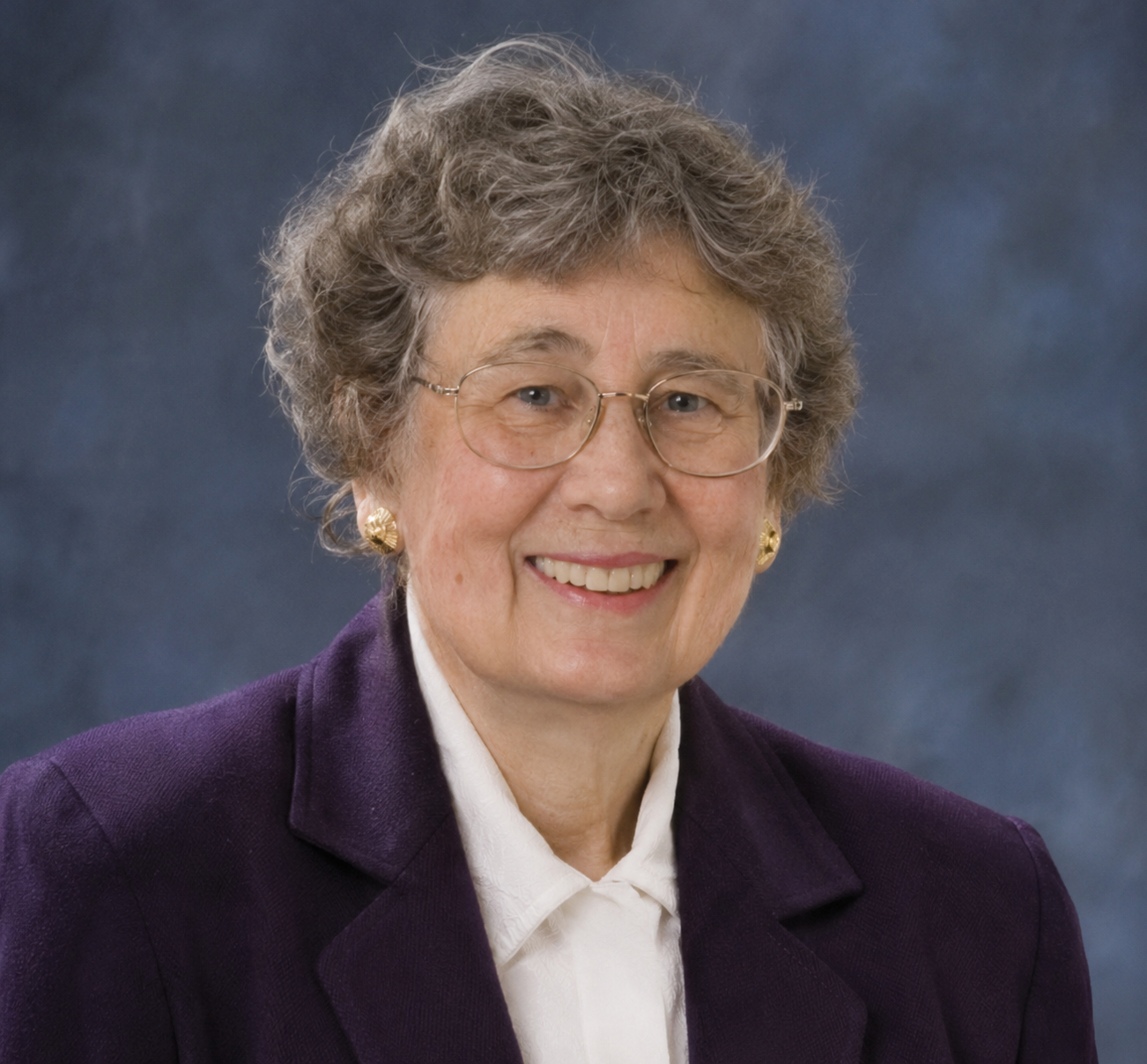
Dr. Janice M. Jenkins was Professor of Electrical Engineering and Computer Science, and of Biomedical Engineering, at the University of Michigan, and the first woman appointed to the faculty of the Department of Electrical Engineering and Computer Science when she was hired in 1980. She was promoted to full professor in 1992 and retired as professor emerita in 2002 after 22 years at Michigan .
Her route into the field was unusual and worth stating plainly. Born in Flint, Michigan and raised in Alton, Illinois, she married in 1951 and raised five children before starting college in the same year as her oldest son, at the age of 37 . She took her bachelor's degree at the University of Illinois at Chicago in 1974, her master's in 1976 and her Ph.D. in 1978 . Her husband died a few months before her final graduation . She then spent a year as assistant professor of electrical engineering, computer science and medicine at Northwestern University before moving to Michigan in 1980 . She later laughed about receiving the NSF Presidential Young Investigator Award at 52, as a grandmother .
Her research defined a field's practical edge: automated arrhythmia analysis using advanced signal processing and computer techniques . As director of the Medical Computing Research Laboratory from 1981 to 2002, she built collaborations with cardiac implant companies including Medtronic and Boston Scientific, which funded much of her work on pacemaker and implantable defibrillator control algorithms . She also directed the Digital Design Laboratory from 1983 to 1998 , an instructional laboratory on microprocessor-based system design that she initiated and taught . Her work drew her into the Biomedical Engineering graduate program and then the BME Department from its founding in 1996, and she held a courtesy appointment there until retirement . Even after moving back to Chicago she returned regularly to oversee her research and was still directing clinical studies at Loyola University Medical Center .
Colleagues remembered both her technical standing and her temperament. George Haddad, who hired her, said she 'did an outstanding job during her tenure at Michigan and helped attract several other female faculty members' . Dave Anderson recalled that 'it was hard to be accepted as a female at that time, but she had the right kind of personality to succeed in this environment and to be recognized' . Jeff Fessler remembered that she 'provided very valuable informal mentoring to me' and that 'she had an impressively diverse research group, long before that became a UM-wide priority' , noting the stacks of reel-to-reel tapes of cardiac signals in her office, amassed to train and test algorithms before 'big data' became a buzzword . She supervised 20 Ph.D. and 8 M.S. students, and in February 2020 the College of Engineering established the Janice M. Jenkins Collegiate Professorship in Computer Science and Engineering in her honour .
Dr. Jenkins built something that did not exist before her: a research programme joining signal processing to the clinical problem of sudden cardiac death. The algorithms her laboratory developed, and the datasets she accumulated on reel-to-reel tape long before anyone called it big data, are the groundwork on which implantable defibrillator control logic was tested. That is engineering that saves lives in the most literal sense.
Her path into the work matters too. She entered college at 37, in the same year as her son, raised five children first, and became the first woman on the faculty of one of the largest EECS departments in the country. She was, by her own account, more worried about age discrimination than sex discrimination , and she spent her career making sure the department attracted the women who followed her.
That combination is unusually well suited to manuscript review in biomedical engineering, where the recurring failure is a validation set too small or too convenient to support the claim. Dr. Jenkins spent two decades building the datasets that made such claims testable. We are grateful for the standard she set.
The APC Leadership Team American Publication ConsultantsTell us about your manuscript and we will match you with the right expert from our team.
Get A Free Quote